Independent · continuously updated · September 2026
An independently researched map of statutory and employer-sponsored coverage for digital therapeutics (DTx), remote monitoring and blended-care programmes — across Europe, the Americas and Asia-Pacific.
 “
“Commercial positioning isn't a footnote to sort out after the product ships — it's the decision that shapes your product strategy, the evidence you generate, and whether you ever scale. Founders need to be sensitive to it from day one, not bolt it on once regulatory approval is in hand. That's the one lesson more than 25 years in MedTech and digital health — as a computer scientist and health economist watching this space the whole way — has only reinforced.
New — interactive
DTx/DiGA, telemonitoring and AgeTech, year by year across every researched market — by track, by country or by numbers.
Open the Timeline →
New — visual glossary
Eight overlapping terms, one containment diagram — Germany-specific terms (DiGA, DiPA) clearly flagged.
See the full breakdown →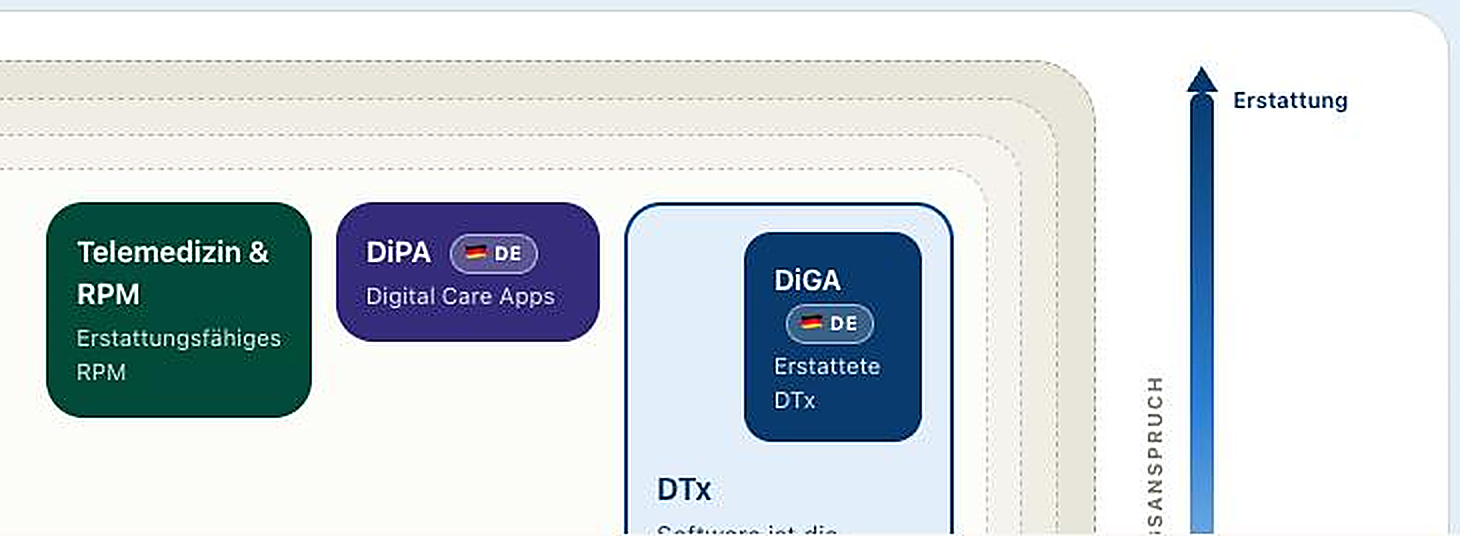
Colour-coded by reimbursement maturity. Hover any country for its status and the major areas it reimburses; click a researched market to open its one-pager. Filter by region to spotlight each group's leading markets.
Non-exhaustive research snapshot. Country colour = reimbursement maturity; purple dots mark 61 global MedTech / digital-health startup hubs (click one for its profile) — toggle Startup hubs to hide them. 20+ further countries were researched but have no reimbursed product yet. Based on current research as of September 2026.
Reimbursement rules vary enormously by country, and vendor claims are often optimistic. This project draws a hard line: a product is only listed as reimbursed if it appears in an official statutory registry (e.g. Germany's DiGA directory), a national tariff/fee schedule (e.g. US Medicare G-codes, Japan's Chuikyo listing), or a documented insurer/employer agreement.
Products that are merely recommended by a clinical body (like the UK's ORCHA library or Denmark's Sundhedsapps council) without an actual payment mechanism behind them are shown separately, clearly labelled, for context rather than counted as reimbursed.
 DigiHealthAccess